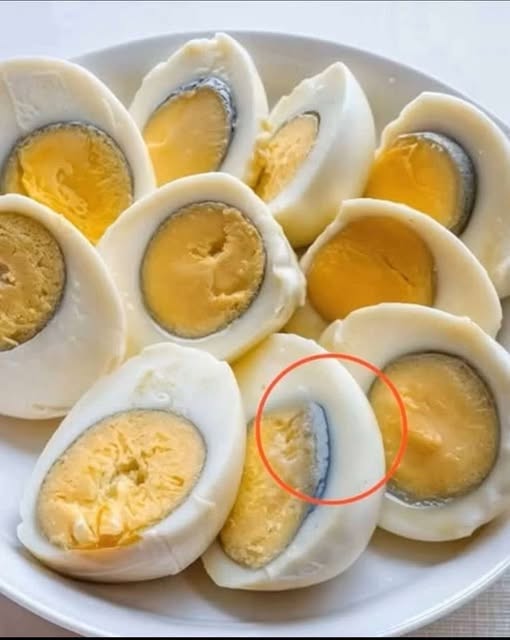
That grayish-green ring around the yolk of a hard-boiled egg is a common—and completely harmless—occurrence. It's not a sign of spoilage, poor quality, or anything unsafe. It's simply a chemical reaction that happens when eggs are overcooked or cooked at too high a temperature.
🔬 The Science Behind the Green Ring
The green ring is caused by a reaction between two naturally occurring compounds in eggs:
|
Compound
|
Found In
|
Role in the Reaction
|
|---|---|---|
|
Iron
|
Egg yolk
|
Released from proteins when heated
|
|
Sulfur
|
Egg white (as hydrogen sulfide gas)
|
Released when egg whites are heated
|
What Happens During Cooking:
- Heat causes proteins in the egg white to break down, releasing hydrogen sulfide gas (which has a faint "rotten egg" smell—though you usually won't notice it).
- The gas migrates toward the yolk, where it encounters iron.
- Iron + hydrogen sulfide = ferrous sulfide, a harmless compound that appears as a grayish-green ring at the yolk's surface.
Discover more
Egg
Egg white
Egg Whites
💡 Key insight: The reaction is accelerated by high heat and long cooking times. That's why the ring is most common in hard-boiled eggs that have been boiled vigorously or left in hot water too long.
✅ Is It Safe to Eat?
Yes, absolutely. The green ring is:
- ✅ Non-toxic and harmless
- ✅ Flavor-neutral (though overcooked eggs may taste slightly sulfurous)
- ✅ Nutritionally unchanged—the egg's protein, vitamins, and minerals remain intact
The only "downside" is aesthetic. Some people find the color unappealing, but it doesn't affect safety or taste in any meaningful way.