How to Prevent the Green Ring
You can avoid the green ring with a few simple cooking adjustments:
Best Practices for Perfect Hard-Boiled Eggs
|
Tip
|
Why It Works
|
|---|---|
|
Don't overcook
|
Cook just until yolks are set (about 9–12 minutes, depending on size)
|
|
Use gentle heat
|
Bring water to a boil, then reduce to a simmer before adding eggs
|
|
Cool eggs quickly
|
Transfer to an ice bath immediately after cooking to stop the cooking process
|
|
Avoid high-altitude adjustments
|
At high elevations, water boils at a lower temperature; increase cooking time slightly but avoid excessive heat
|
|
Use older eggs for boiling
|
Slightly older eggs (7–10 days) peel more easily and may be less prone to overcooking issues
|
Simple Method for Green-Ring-Free Eggs:
- Place eggs in a single layer in a saucepan; cover with cold water by 1 inch.
- Bring to a rolling boil over high heat.
- Immediately remove from heat, cover, and let stand:
- Large eggs: 10–12 minutes
- Medium eggs: 9–10 minutes
- Drain and transfer eggs to a bowl of ice water for at least 5 minutes.
- Peel and enjoy!
🧊 Why the ice bath matters: Rapid cooling stops the cooking process and prevents the iron-sulfur reaction from progressing.
❓ FAQs: Your Egg Questions, Answered
Q: Does the green ring mean the egg is old or bad?
A: No. Fresh and older eggs can both develop the ring if overcooked. Age affects peelability more than ring formation.
A: No. Fresh and older eggs can both develop the ring if overcooked. Age affects peelability more than ring formation.
Q: Can I remove the green ring after it forms?
A: Not really—it's a surface reaction within the yolk. But it's harmless, so there's no need to remove it.
A: Not really—it's a surface reaction within the yolk. But it's harmless, so there's no need to remove it.
Discover more
Eggs
Egg
Cookware
Q: Do brown eggs get green rings more than white eggs?
A: No. Shell color doesn't affect the reaction. It's about cooking method, not egg variety.
A: No. Shell color doesn't affect the reaction. It's about cooking method, not egg variety.
Q: Why do some hard-boiled eggs smell sulfurous?
A: Overcooking releases more hydrogen sulfide. Proper cooking time and rapid cooling minimize this.
A: Overcooking releases more hydrogen sulfide. Proper cooking time and rapid cooling minimize this.
Q: Can I prevent the ring when using an Instant Pot or air fryer?
A: Yes! Follow recipe guidelines for time and pressure, and always do a quick release + ice bath to stop cooking.
A: Yes! Follow recipe guidelines for time and pressure, and always do a quick release + ice bath to stop cooking.
Q: Does adding vinegar or salt to the water help?
A: Not for preventing the green ring. Vinegar helps seal cracks; salt may make peeling easier—but neither affects the iron-sulfur reaction.
A: Not for preventing the green ring. Vinegar helps seal cracks; salt may make peeling easier—but neither affects the iron-sulfur reaction.
💙 A Compassionate Closing Thought
If you've ever been worried that a green-ringed egg meant you'd "ruined" breakfast or served something unsafe—please relax.
🥚 You didn't do anything wrong. This reaction happens to the best of us, even experienced cooks.
🥚 The egg is still good. Nutrition, safety, and flavor remain intact.
🥚 Small tweaks make a big difference. Next time, try the ice bath trick—you'll see a difference.
🥚 Cooking is learning. Every "mistake" is just a step toward mastery.
🥚 The egg is still good. Nutrition, safety, and flavor remain intact.
🥚 Small tweaks make a big difference. Next time, try the ice bath trick—you'll see a difference.
🥚 Cooking is learning. Every "mistake" is just a step toward mastery.
Discover more
Science
egg
Condiments & Dressings
So go ahead—enjoy that hard-boiled egg, green ring and all. Or try the quick-cool method next time. Either way, you're nourishing yourself, and that's what matters.
🧭 The Bottom Line
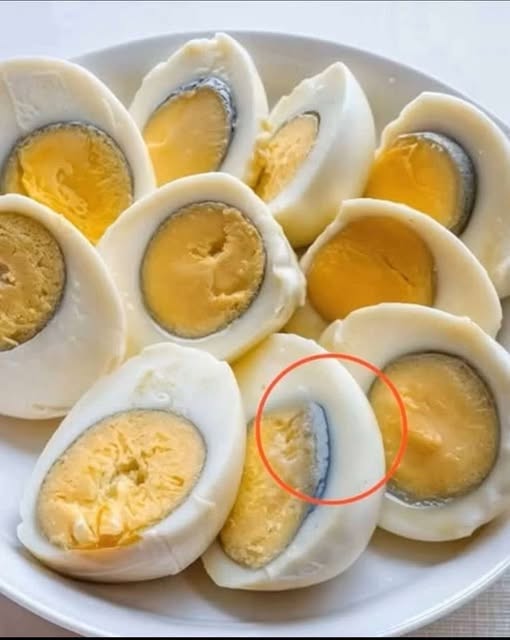
The green ring around hard-boiled egg yolks is a harmless chemical reaction between iron (in the yolk) and sulfur (in the white), accelerated by high heat and long cooking times.
Remember: 🔬 Iron + sulfur + heat = ferrous sulfide (the green ring)
✅ It's safe, tasteless, and nutritionally unchanged
🧊 Prevent it with gentle cooking + immediate ice bath cooling
🥚 Don't stress—your eggs are still delicious and wholesome
✅ It's safe, tasteless, and nutritionally unchanged
🧊 Prevent it with gentle cooking + immediate ice bath cooling
🥚 Don't stress—your eggs are still delicious and wholesome
Now you know the science—and the simple fix. Happy boiling! 🥚