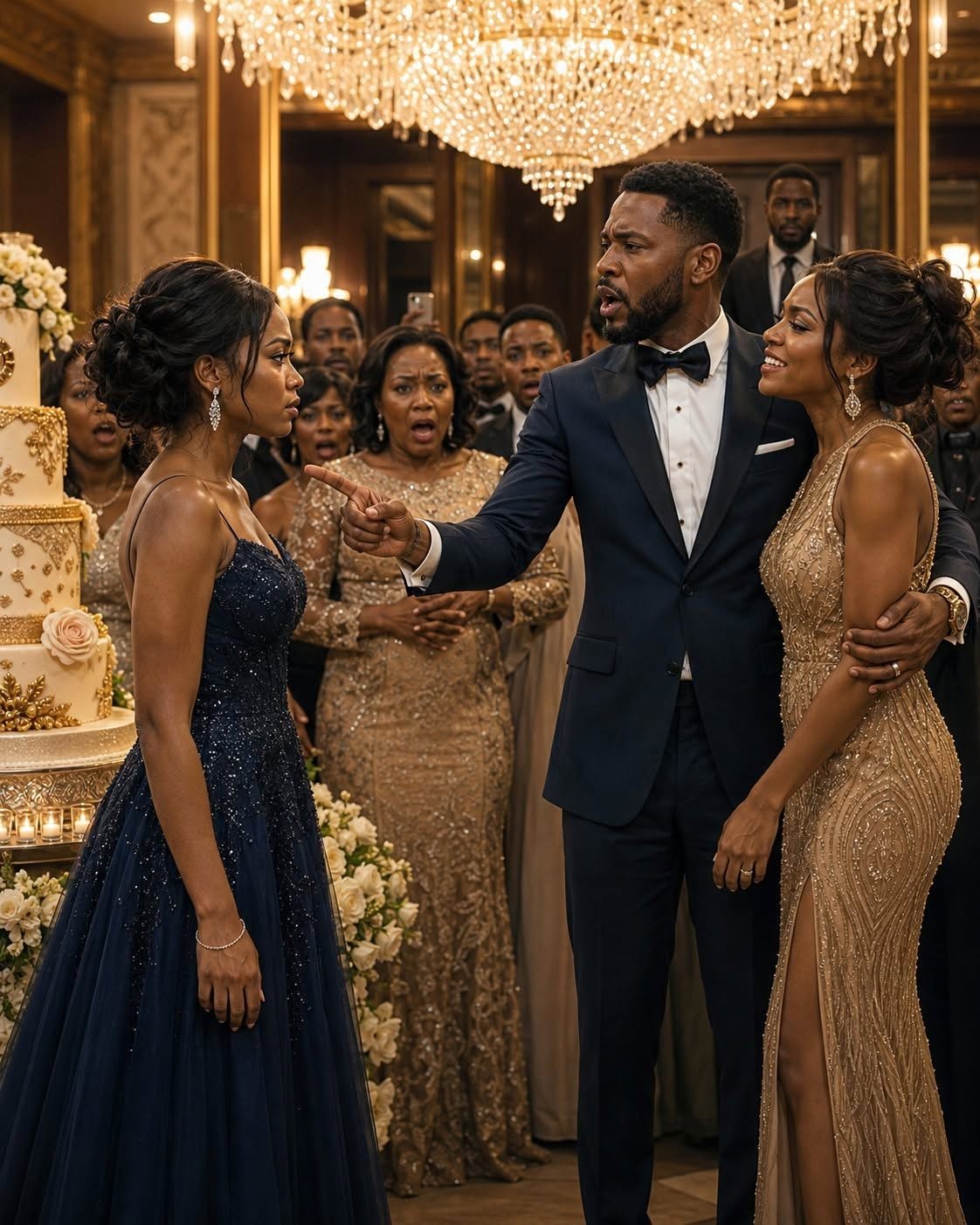
Part 8: The Shadow Director
The warehouse near the Dakar port smelled intensely of salty sea air, damp cardboard, and heavy engine oil. For Fannah, that industrial scent quickly transformed into something infinitely more intoxicating: a blank canvas and a path to absolute redemption.
Her first week working as the operations lead for Mamadu Sar’s logistics depot had been a grueling trial by fire. The paperwork was piled in disorganized, dusty heaps on a folding table; the daily shipment logs were chronically incomplete; and independent drivers came and went without clear delivery instructions or accountability metrics. Deliveries were routinely delayed, crates were constantly misplaced, and the warehouse owner’s stress was painfully obvious in the way he rubbed his temples at three o’clock every single afternoon.
But structural chaos was something Fannah understood how to tame. She possessed a natural, mathematical mind for logistics. By her third day on the job, she had overhauled the messy shipment records into simple, color-coded categories. She created a strict manifest schedule for all incoming cargo, clearly labeled the storage zones with fresh paint, and convinced the gruff drivers to sign off on digital delivery confirmations before they were allowed to pull away from the loading dock.
It wasn’t a glamorous corporate job in a glass tower, but it was honest, grueling, and deeply rewarding work. And every evening when she returned to her modest apartment, utterly exhausted but mentally sharp, she felt a profound sense of pride.
That Friday afternoon, Mamadu stood near the edge of the elevated loading dock, watching her cross-reference an inventory list with absolute precision. He took a sip of his tea and walked over, a wide, appreciative smile breaking across his broad face.
“You know, Fannah,” he said, shaking his head in disbelief. “I should have fired my cousin and hired you six months ago. This depot has never run this smoothly.”
Fannah smiled, wiping a smudge of graphite from her cheek. “I’m glad you didn’t, Madu. Otherwise, I might never have discovered how incredibly resilient I can be when pushed to the edge.”
Madu chuckled warmly. “Well, Ibrahima was absolutely right about you. He said you were a force of nature.”
At the mention of that name, Fannah glanced toward the open gate of the depot, as if summoned by the thought. Ibrahima Dio stepped onto the concrete floor a few moments later. He wore a faded blue work shirt, dark trousers, and scuffed leather boots, carrying a small manila folder under his muscular arm.
“Good afternoon, Mr. Sar,” Ibrahima said, nodding to the owner.
Madu greeted him with deep, unpretentious warmth. “You are just in time, my friend. Your referral here is practically saving my business from bankruptcy. Come, sit.”
Ibrahima cast a brief, approving glance at Fannah. “I knew she would.”
Fannah felt a pleasant flush of heat spread across her neck. Over the past ten days, Ibrahima had become a constant, comforting fixture in her daily routine. He appeared at the warehouse at least three times a week, sometimes dropping off commercial waybills for Madu, other times simply checking to see if she needed a bottle of water or a break from the heavy lifting.
Yet, he never once condescended to her or interfered with her operational authority. He simply observed the workspace, occasionally offering business advice that was shockingly sharp and strategic for a man who claimed to run simple “errands” around the port.
That afternoon, while Madu stepped away to resolve a dispute with an impatient flatbed driver, Ibrahima leaned lightly against a stack of empty pallets. “How is the pace?” he asked, watching her organize a stack of waybills.
“Busy,” Fannah replied, looking up with a tired but happy smile. “But a good, healthy busy. Not the soul-crushing kind.”
“You look different,” he noted, his dark gray eyes tracking her movements. “Lighter. Less burdened by the past.”
Fannah paused, holding a clipboard to her chest. “Maybe because I’m finally pouring my energy into something that belongs entirely to me. My work here has dignity.”
“Work should always have dignity,” Ibrahima said softly. “It’s the measure of a person’s character.”
She studied his calm, weathered face for a long beat. “You know, Ibrahima… you talk about logistics, contracts, and business development like a seasoned corporate executive. Yet you claim to just do odd jobs around the docks. It doesn’t quite add up.”
A faint, enigmatic smile touched his lips. “I observe a great deal, Fannah. You would be amazed at what you can learn about an industry just by watching how people treat the people who load their trucks.”
Before she could press him further on his background, Mamadu hurried back into the office area with a dark, thunderous expression on his face. He held a crumpled piece of official correspondence in his thick hand.
“We have a major problem,” Madu announced, his voice tight with rising panic.
Fannah’s smile evaporated. “What kind of problem, Madu?”
The owner dropped a legal notice onto the messy desk. “This shipment contract here… one of our anchor accounts, a huge commercial distributor, just pulled out of our distribution deal. They terminated the contract forty-eight hours before the winter inventory drops.”
“Terminated?” Fannah frowned, grabbing the paper. “Why? We’ve already secured the cross-docking slots.”
“They wouldn’t give a clear operational reason,” Madu said, running a hand over his shaved head. “The purchasing manager just said it was an ‘executive directive from the parent company’.”
Fannah scanned the header of the legal termination notice. As her eyes registered the name of the parent corporation, her stomach plummeted into her shoes.
Nadir Construction and Development Group. Musa’s corporate syndicate.
Fannah felt a cold, familiar wave of dread wash over her skin. It wasn’t an administrative coincidence. It was a targeted, malicious attack. Musa had discovered where she was employed, and he was using his massive capital influence to systematically choke the life out of her new beginning.
“He’s doing this because of me,” Fannah whispered, the horrifying realization choking her breath. “He knows I run the operations here. He’s punishing you, Madu, just to get to me.”
Madu looked uncomfortable, shifting his weight. “You… you know this man?”
“He was my fiancé,” she said, her voice dropping to a harsh, pained baritone. “The one who humiliated me at the engagement party. He is a monster.”
Madu sighed heavily, looking at the empty contract. “That anchor account represented nearly fifty percent of our projected monthly revenue. If they pull out, this depot cannot survive the winter payroll. We will go under.”
Fannah lowered her head into her hands, the crushing weight of failure threatening to drag her under. The dark voice of her past—the voice of her mother, of Awa, of the society gossips—whispered that she was cursed, that every door she touched would inevitably rot.
But then, a large, warm hand descended onto her trembling shoulder.
She looked up. Ibrahima was standing beside her chair, his face entirely calm, radiating an unshakeable, predatory confidence.
“He thinks he has successfully cornered you, Fannah,” Ibrahima said, his voice ringing with absolute authority. “But he is making a catastrophic mistake. He has brought a knife to a gunfight, and he doesn’t even know it yet.”
Part 9: The Arrogance of Power
Across the bustling capital, inside a sprawling, glass-walled penthouse office suite hovering over the central business district of Dakar, Musen Diay sat behind an immense desk made of imported ebony wood. The floor-to-ceiling windows offered a panoramic view of the Atlantic, but right now, the billionaire developer’s eyes were fixed entirely on the printed corporate intelligence dossier lying open on his blotter.
He took a slow sip of his espresso, his jaw tightening as he read the updated operational summary provided by his high-priced private investigator.
“So,” Musa drawled, glancing up at the sharply dressed corporate fixer standing across the room. “She managed to land an operations lead position at a dilapidated cross-docking depot near the port.”
“Yes, Mr. Nadier,” the investigator confirmed, tapping his leather folder. “A small outfit called Sar Logistics. Run by a local named Mamadu.”
“And you’re telling me that this failing warehouse’s revenue has mysteriously doubled in ninety days?”
“Ever since she took over the administrative routing, their cross-docking turnaround times have dropped by forty percent,” the investigator reported. “She’s siphoning our smaller commercial accounts by undercutting our transport quotes.”
Musa’s eyes flashed with genuine malice. “A discarded administrative assistant thinks she can compete with my syndicates in the transport sector. How incredibly cute. Did you deliver the legal notice regarding the intellectual property theft concerning their routing software?”
“It was served by our legal team on Tuesday morning. They have exactly seven days to cease operations or face a ruinous intellectual property lawsuit.”
“Excellent,” Musa smiled, leaning back in his leather chair. “A small-time operator like Mamadu cannot afford a prolonged deposition process. The second they fold, she will be out on the street with zero references. Her little rehabilitation project will be utterly destroyed, and she will have no choice but to crawl back to her family’s compound in disgrace.”
The investigator shifted uncomfortably, clearing his throat. “Sir… there is one rather complicated detail in this latest update that we need to factor into the litigation strategy.”
Musa frowned, his predatory smile faltering. “What detail?”
The investigator pulled a printed corporate registry document from his folder and laid it gently over the ebony desk. “We ran a deep-dive asset tracing on the warehouse property itself, just to see who holds the underlying commercial mortgage. It turns out that Sar Logistics does not own the depot. The property is held by a shell holding company registered in the Caymans.”
“I don’t care about offshore tax shelters,” Musa snapped. “Who is the ultimate beneficial owner?”
The investigator pointed a steady finger at the bottom of the registry printout. “The controlling shareholder of the holding company is a private equity vehicle registered as Dio Strategic Holdings.”
Musa stared at the paper, the name ringing a bell somewhere in the deep recesses of his memory. Dio Strategic Holdings. It was an absolute monster in the West African investment landscape—a private equity titan that controlled billions in port infrastructure, shipping lines, and massive commercial real estate projects across the continent.
“Dio Strategic,” Musa muttered, a cold knot of dread beginning to form in the pit of his stomach. “What does an investment firm of that magnitude have to do with a two-bit cross-docking depot in Dakar?”
“Sir… the managing director and sole voting shareholder of Dio Strategic Holdings…” the investigator swallowed hard. “…is Ibrahima Dio.”
Musa’s coffee cup clattered against the ebony desk, dark liquid splashing over the polished wood. “Ibrahima Dio? Are you telling me that the managing director of Dio Holdings is representing a broke, local warehouse owner?”
“It’s worse than that, Mr. Nadier,” the investigator said, his voice dropping to a whisper. “Ibrahima Dio isn’t just representing them. According to the municipal registry filed this morning… Ibrahima Dio is legally married to Fannah Cece.”
The spacious, climate-controlled office suddenly felt as if it had dropped twenty degrees. Musa stared at the investigator in unadulterated horror.
He remembered the quiet, unassuming man in the plain black shirt he had barely noticed standing near the catering doorway at his glittering engagement party. He had dismissed him as a venue technician or an electrician.
Musa’s breath hitched in his throat as the horrific, panoramic view of his catastrophic miscalculation finally dawned on him. He hadn’t just bullied a vulnerable, discarded former fiancée.
He had just declared corporate and legal war against the most powerful, ruthless, and well-connected shadow investor in the entire country.
Part 10: The Master Strategist
Back at the port district, the small, sun-baked offices of Sar Logistics were wrapped in the tense, palpable quiet of a tactical holding pattern. For Mamadu, the seven-day countdown toward a ruinous lawsuit had been an agonizing endurance test. He paced between the stacks of wooden crates, checking his mobile phone every four minutes, muttering frantic prayers to the morning sky.
“The deadline is noon today, Fannah,” Mamadu said, his voice cracking with anxiety as he stared at the legal notice resting on his desk. “If their corporate lawyers file the injunction, the port authority will freeze our operating licenses by tomorrow morning. We are finished.”
Fannah sat perfectly upright in her swivel chair, organizing a fresh stack of customs manifests with crisp, methodical movements. Despite the chaos swirling in her supervisor’s mind, a quiet, immovable sense of peace had settled deep into her bones.
“Don’t panic, Madu,” she said, her baritone perfectly smooth and unhurried. “A problem is only a problem if you refuse to change the variables of the equation. We have responded.”
“A simple letter from us won’t stop a shark like Musa Nadier!”
Just then, the heavy steel door of the warehouse clicked open.
Ibrahima Dio stepped onto the concrete floor. He was wearing his standard working attire—a faded blue shirt, dark trousers, and scuffed boots—but he moved through the space with the total, unbothered ease of a general inspecting his own invincible troops.
Madu threw his hands up in the air. “Ah, Ibrahima, my friend! You arrive on the day of our execution! Do you have a miracle in that little folder?”
Ibrahima smiled faintly, walking over to the wooden desk. “Good morning, Madu. And yes, I believe I do.”
He extracted a thick, heavily embossed legal envelope from his folder and placed it squarely over Musa’s threatening notice. Fannah leaned back in her chair, watching him with a mixture of awe and deep curiosity.
“What is this, Ibrahima?” she asked, her eyes locking onto his steady, gray gaze.
“This,” Ibrahima said, resting his large, calloused hands on the edge of the desk, “is a formal counter-briefing. It was delivered to NDI Construction’s general counsel at nine o’clock this morning.”
Madu leaned in, squinting at the envelope. “And what could possibly be in there that makes a multi-million-dollar developer back down?”
“First,” Ibrahima explained, ticking the points off on his fingers with clinical precision, “it contains forensic digital evidence proving that the logistics routing architecture utilized here was custom-designed by Fannah during her tenure at a completely independent firm—long before she ever signed a consulting contract with Musa’s development group. The intellectual property theft claim is therefore legally frivolous.”
Madu’s eyes widened. “Incredible. And second?”
“Second,” Ibrahima continued, his tone dropping into a much colder, authoritative register, “it compiles three years of internal email records, shipping contracts, and subcontractor invoices demonstrating a clear, unambiguous pattern of predatory business interference and targeted market retaliation on the part of Mr. Nadier.”
The warehouse owner let out a low, appreciative whistle. “You are hitting them with an antitrust countersuit.”
“Exactly,” Ibrahima said, looking over at Fannah, who was staring at him as if seeing a completely different person. “If Mr. Nadier wishes to pursue litigation, our legal team will be more than happy to expose his fraudulent accounting practices to the federal oversight boards and the infrastructure ministry. I highly doubt his current banking syndicate will look kindly upon a high-profile federal investigation into his ledgers.”
“You write like a corporate litigator, Ibrahima,” Fannah murmured, the pieces of the puzzle violently snapping into a cohesive, staggering shape.
“I’ve had considerable experience with predatory partners, Fannah,” he said softly.
Before Madu could express his total jubilation, the landline telephone on the desk began to shriek. The warehouse owner jumped, hesitating before jabbing the speakerphone button.
“This is Sar Logistics,” Madu barked, puffing out his chest.
“Madu? Yes, hello, this is Harrison,” a frantic voice crackled over the speaker. It was the lead legal counsel for NDI Construction—the very man who had swaggered into the depot days ago with threats of destruction. “Listen… regarding the intellectual property dispute notice served last week… there appears to have been an unfortunate administrative miscommunication.”
Madu shot a triumphant glance at Fannah. “A miscommunication, counselor?”
“Yes, entirely procedural,” the lawyer babbled, clearly sweating through his expensive silk tie on the other end of the line. “Our client, Mr. Nadier, has reviewed the clarifying technical addendums submitted by your… ah… representative, Mr. Dio. We are officially withdrawing the injunction request. The notice is null and void. We wish you the best in your logistics expansion.”
Click. The line went dead.
The small, cluttered office fell into a profound, ringing silence. Madu stared at the dead phone, then threw his head back and let out a roar of pure, unadulterated joy that echoed off the high corrugated iron roof.
“He backed down!” Madu yelled, grabbing Ibrahima and shaking his hand with violent enthusiasm. “The great Musa Nadier just tucked his tail between his legs and ran! Fannah, we did it! We are saved!”
Fannah didn’t jump up. She remained seated, her eyes locked onto Ibrahima’s calm, unreadable face. The man who had shared cheap street food with her, who had listened to her pour out her heart regarding her deepest humiliations, was the shadow operator of the entire region’s transport infrastructure.
“You’re not just an investor, are you?” Fannah said, her voice dropping into a quiet, serious register as Madu stepped outside to celebrate with the drivers. “You are the phantom operator of Dio Strategic Holdings. You own the port logistics network.”
Ibrahima didn’t flinch. He didn’t offer a weak denial. He walked slowly toward her, pulling out the folding chair and sitting down so that his eyes were level with hers.
“Yes,” he confessed, the admission ringing with absolute, unvarnished clarity in the small room. “I am Ibrahima Dio. I own the logistics network.”
“But why?” Fannah asked, the confusion warring with a deep, blossoming respect in her chest. “Why did a man of your status marry a broke administrative assistant with a scandal attached to her name? Why live in a modest flat near the port? Why play the part of a nobody?”
Ibrahima reached out, his warm, rough fingers gently tracing the line of her jaw. “Because when you reach a certain level of wealth in this city, Fannah, everyone you meet is wearing a mask. People only love the altitude of your bank account. They love the prestige of your name. I wanted to build a real life with someone who loved me for the simple, quiet reality of who I am when the cameras are turned off.”
He smiled, a deep, beautiful expression that transformed his severe features. “The night of that engagement party, when everyone inside that hall was laughing at your expense, I saw a woman whose pride could not be bought or sold. You were discarded by a fool, Fannah, but you carried yourself like a queen. I didn’t marry you out of pity. I married you because you were the only real thing in a very synthetic city.”
A single tear spilled over Fannah’s lashes, tracing a path down her cheek. The deep, agonizing humiliation of being publicly dumped by Musa suddenly evaporated, replaced by the thrilling, undeniable reality of her new altitude.
“You’ve been testing me,” she whispered.
“I’ve been observing you,” he corrected gently. “And you have passed every test this city has thrown your way. Now, let us go home. We have an empire to run together.”
Fannah stood up, unhitched her heavy warehouse keys from her belt, and placed them in her tote bag. She had walked into this depot as a broken, humiliated cast-off, desperate for basic survival. She was walking out as a vital, equal partner in an infrastructure empire.
The fairy tale she had dreamed of with Musa had been a shallow, fragile illusion. The reality she had built with Ibrahima was made of unbreakable steel.
Part 7: The True North
The new botanical tearoom inside the restored heritage stables of Hartley Court was an absolute triumph of architectural vision and horticultural passion. Late autumn sunlight poured through the soaring, arched glass windows, illuminating the original exposed brickwork, the polished flagstone floors, and the vibrant array of exotic orchids and climbing ivy.
It was the final Saturday of November, exactly fourteen months since the disastrous society wedding that had set her entire life on fire.
Dela sat comfortably on a plush velvet settee in the far corner of the sunlit tearoom, watching the steady stream of patrons enjoying premium loose-leaf teas and exquisite, miniature pastries. The tearoom, operating under the name Hails Orchard, had been open for six months, and despite Adam’s dire, pessimistic financial forecasts, it was booked solid every single weekend, proving that the county’s elite loved nothing more than consuming artisanal treats inside a venue that subtly subverted their traditional social rituals.
The brass key turned softly in the doorway, and Adam walked into the flagstone kitchen carrying a flat of fresh, locally sourced figs. He was dressed in a well-tailored charcoal suit, his dark hair neatly trimmed, moving with the quiet, unhurried confidence of a man who was no longer haunted by the ghosts of his father’s past.
He caught her eye through the service hatch and smiled—a slow, genuine curving of his lips that reached all the way to his slate-gray eyes.
He set the figs down and walked over to the settee, sitting down beside her, his solid shoulder pressing warmly against hers. “The orchard accounts are balanced,” he murmured, pulling a small, familiar brass key from his pocket and turning it over in his calloused fingers. “And Mrs. Adami informs me that the private booking for the county historical society next weekend is fully secured.”
Dela leaned into his side, inhaling the crisp, clean scent of his wool coat and the faint, sweet trace of vanilla from the kitchen. “You see? I told you that turning the old stable block into a botanical tearoom was a sound investment. You just lack the vision of a professional baker, Adam Hail.”
“I lack a great many things, Dela,” he said, his voice dropping into that quiet, intimate register that always made her heart flutter. “But I appear to have acquired excellent management in my old age.”
A soft, companionable silence settled over them as they watched the patrons enjoy the fruits of their labor. Across the room, sitting three tables away, was Camila Vance.
She was unaccompanied, nursing a pot of green tea, wearing an unflashy wool coat. Her expression was thoughtful, somewhat subdued, but noticeably devoid of the brittle, desperate charm she had worn like armor on her wedding day. Over the last six months, Camila had become a regular patron of Hails Orchard, often coming in on quiet Tuesday mornings to read a book or simply sit in the sunlit flagstone space.
The high-society marriage had rapidly unraveled behind the closed doors of the gated communities. Julian Crew had continued to lift his chin at the world, proving entirely incapable of building a real partnership with a woman he had won like a trophy at an auction, and Camila had finally found the courage to dismantle the gilded cage she had willingly locked herself inside.
As if sensing their gaze, Camila looked up. She didn’t offer the poisonous, defensive socialite smile she had once perfected. She simply raised her teacup in a small, respectful, and entirely authentic gesture toward the back row.
Dela raised her own hand, returning the quiet acknowledgment, feeling absolutely no residue of the old bitterness, the old hunger, or the old, paralyzing fear of being left behind.
“You know…” Adam said, his fingers brushing a stray lock of hair from her cheek. “You could easily sit at the center table near the glass doors, Dela. It’s your tearoom, after all. You don’t have to hide in the back corner.”
Dela smiled, looking into the eyes of the man who had bought an empire just to heal a broken heart, the man who had made the fringes of life feel like a deliberate, beautiful choice.
She pinched his lapel playfully between her flour-dusted fingers. “I know, Adam. But the back row… the back row is where the real country is.”
And there, in the warm, sunlight-drenched heart of an estate that had once been a tomb, they sat together—two imperfect people who had bravely walked through the fire, entirely content with the beautiful, ordinary reality they had built with their own hands.