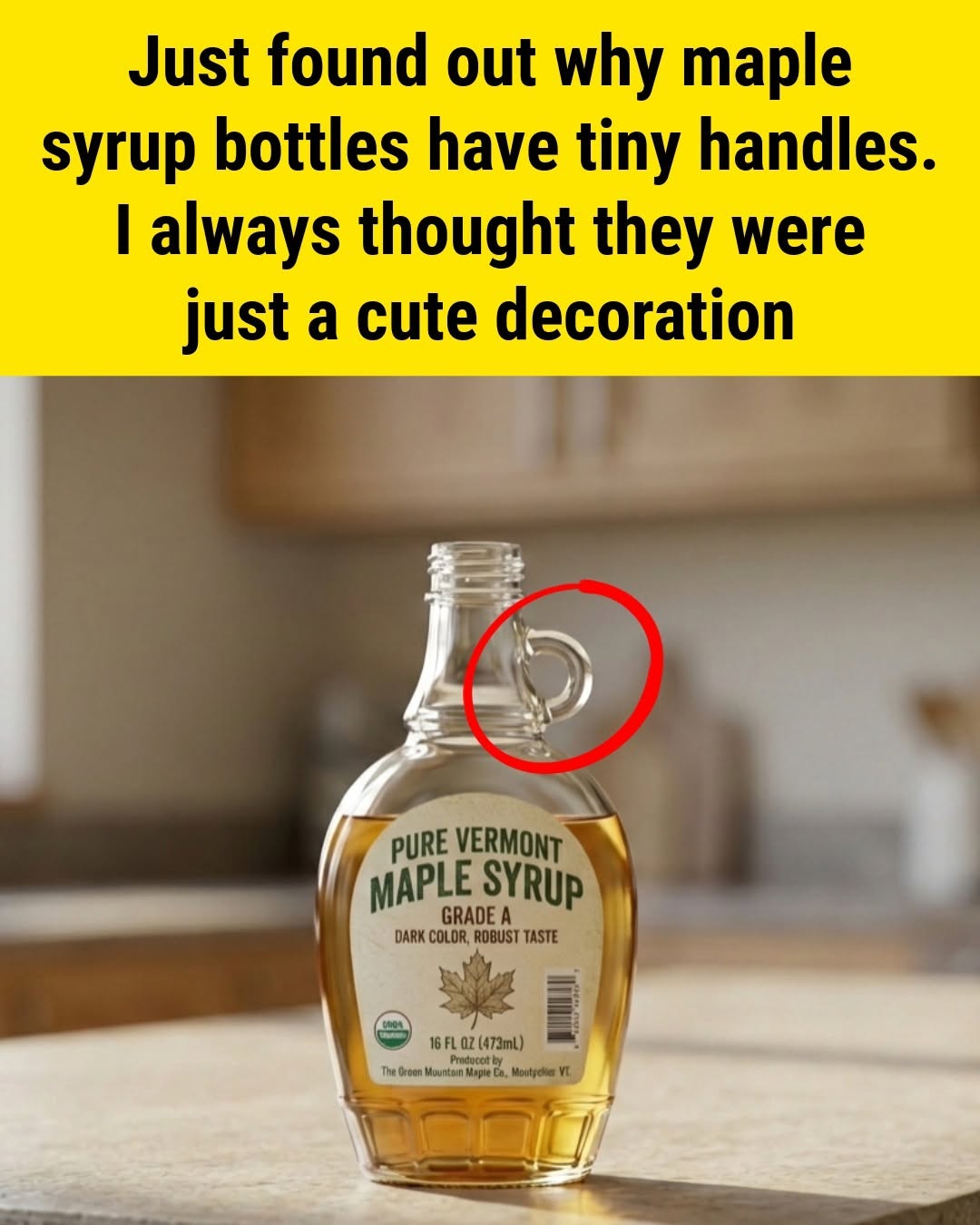
Why Do Maple Syrup Bottles Have Tiny Handles? The Surprising History Behind That Useless Loop is one of those oddly satisfying questions most people never think to ask. Nearly everyone has seen that tiny loop on the neck of a maple syrup bottle, yet very few people know why it exists.
At first glance, the handle seems completely impractical. It is too small for most fingers, too delicate to carry a full bottle, and almost impossible to use comfortably while pouring. Still, manufacturers continue adding it decade after decade.
The answer turns out to be far more interesting than simple decoration. That tiny loop is actually a surviving piece of history — a reminder of how maple syrup was once stored, carried, and sold long before modern packaging existed.
I remember asking my grandmother about those miniature handles during breakfast one snowy winter morning. She laughed and told me her parents used to buy syrup in heavy stoneware jugs with thick handles large enough to grip with mittens. Suddenly, that little loop on modern bottles stopped looking useless. It became a tiny echo of another era — one quietly preserved through design.
The Original Purpose Behind Maple Syrup Handles
Modern syrup bottles may look decorative, but their ancestors were built for hard work.
Early Maple Syrup Containers Were Heavy
In the 1800s and early 1900s, maple syrup was commonly stored in:
Ceramic crocks
Stoneware jugs
Large tin containers
Thick glass bottles
These containers often held large quantities of syrup and became extremely heavy when full.
A strong handle was essential for:
Carrying
Pouring
Transporting
Storage
Without sturdy handles, lifting sticky, heavy syrup containers would have been difficult and messy.
Farmers Needed Practical Packaging
Maple syrup production originally happened on small farms and family sugarhouses.
See also How Long Does Flour Really Last? Here’s What You Should Know Before Baking
Producers carried syrup:
Across snowy fields
Into wagons
Through markets
Into kitchens
Large loop handles made daily work easier during long winters and busy harvest seasons.
How Modern Bottles Changed the Design
Technology eventually transformed syrup packaging.
Glass Manufacturing Became More Efficient
By the mid-20th century:
Glass bottles became lighter
Production costs dropped
Shipping became easier
Packaging became more standardized
Manufacturers no longer needed oversized handles because bottles were smaller and easier to lift.
Yet surprisingly, the handle never disappeared entirely.
The Handle Became Symbolic
Instead of removing the handle completely, designers reduced it into the tiny decorative loop many bottles still use today.
The modern version serves more as: