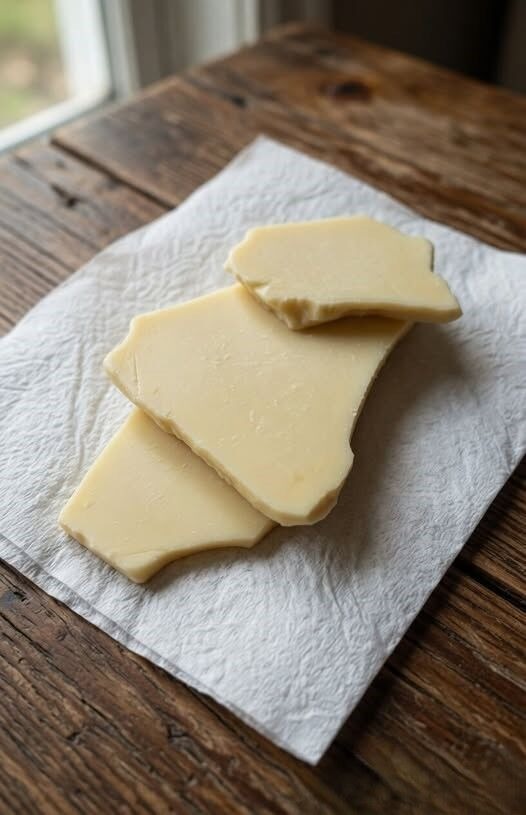
It started as a normal morning—laundry, coffee, the usual chaos of getting everyone out the door. Then I stepped into my teenage son’s room to tidy up and saw it: pale, brittle fragments scattered near the bed, half-hidden in shadow.
My breath caught.
They looked… wrong. Chalky. Powdery. Unnatural. In that split second, my mind raced through every worst-case scenario a parent dreads. My heart pounded. My hands shook as I picked up a piece.
What is this? Did I miss something? Is he in trouble?
Fear doesn’t wait for facts. It fills silence with stories—often terrifying ones.
Then I leaned closer. Sniffed. Rubbed it between my fingers.
It was white cheddar cheese.
Yes—a long-forgotten snack that had vanished weeks ago, only to reappear under the bed as a desiccated, dust-coated relic that bore no resemblance to food.
🧀 Why White Cheddar Tricks So Many Parents
Unlike bright orange cheddar, white cheddar lacks annatto (the natural dye that gives cheese its familiar hue). When it dries out:
- It turns chalky white or grayish
- It crumbles like plaster
- It collects dust and lint, looking more like debris than dairy
- In dark corners, it can even develop a mold-like powdery coating (though often just dried fat)
After days—or weeks—under a bed, it becomes unrecognizable. And in that ambiguity, panic thrives.
😅 You’re Not Alone
This happens in more homes than anyone admits. Kids tuck snacks into pockets, forget them in drawers, or abandon half-eaten cheese during gaming marathons. What starts as a harmless bite becomes a mystery object that sends parents into emotional freefall.
And honestly? That moment of fear—however brief—is a testament to how deeply we care.