Thickened nail
Brittle texture
Odor
4.2 Bacterial Infections
Bacteria can enter through small breaks in the nail. This may lead to:
Redness
Swelling
Pain
Pus formation
In severe cases, infections may spread beyond the nail area.
5. Allergic Reactions to Nail Products
Some individuals develop sensitivity to ingredients in nail products, especially:
Methacrylates (in acrylics and gels)
Formaldehyde resins
Adhesives and primers
Symptoms include:
Itching around nails
Redness and swelling
Peeling skin
Burning sensation
Repeated exposure can worsen sensitivity over time.
6. Trauma From Improper Removal
One of the most damaging practices is forcefully removing artificial nails.
Common mistakes include:
Peeling off gel or acrylic nails
Scraping with sharp tools
Over-soaking in acetone
Aggressive filing
This can cause:
Partial nail loss
Deep surface damage
Painful nail bed exposure
7. Nail Discoloration
Damaged nails often change color due to:
Blood trapped under nail (bruising)
Fungal infection
Product staining
Keratin breakdown
Colors may include:
White patches
Yellow tint
Brown streaks
Dark spots
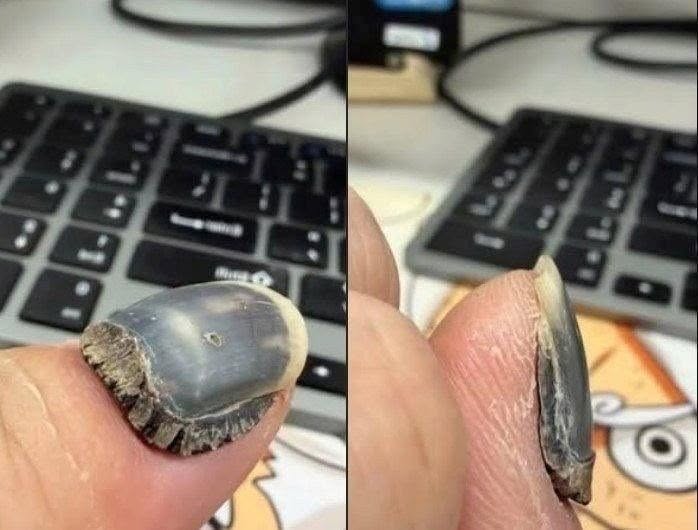
The image you provided shows dark debris-like material, which can occur when the nail plate separates and collects keratin buildup or environmental debris.
8. Nail Deformation
Long-term damage may result in permanent nail shape changes:
Curved or spoon-shaped nails
Ridged surface
Uneven growth
Permanent thickening or thinning
The nail matrix can be affected if trauma is severe or repeated.
9. Pain and Sensitivity
Damaged nails often become sensitive because:
The nail bed is exposed
Protective layers are reduced
Minor pressure becomes painful
People may experience discomfort while:
Typing
Wearing shoes (toenails)
Washing hands
Gripping objects
10. Psychological and Social Impact
While often overlooked, nail damage can affect confidence. Many people use nail enhancements for self-expression, so damage can lead to:
Embarrassment
Avoidance of social situations
Anxiety about appearance
This can sometimes lead to overcompensation by applying more enhancements, worsening the cycle.
11. Warning Signs of Nail Damage
Early signs that nails are being overworked include:
Increased brittleness
Peeling layers
Pain after removal
White spots or ridges
Nail lifting at edges
Slow growth
Recognizing these signs early can prevent long-term damage.
12. How to Recover Damaged Nails
Recovery requires patience because nails grow slowly (about 3 mm per month).
12.1 Take a Break From Enhancements
Allow nails time to regrow naturally.
12.2 Keep Nails Clean and Dry
This prevents fungal or bacterial growth.
12.3 Moisturize Regularly
Use:
Cuticle oil
Hand creams
Nail-strengthening serums
12.4 Trim and File Gently
Avoid aggressive shaping during recovery.
12.5 Balanced Nutrition
Nail health improves with nutrients like:Health
Biotin
Protein
Iron
Zinc
13. When to Seek Medical Attention
Consult a healthcare professional if you notice:
Persistent pain
Severe discoloration
Pus or swelling
Nail detachment
Rapid worsening of symptoms
These may indicate infection requiring treatment.
14. Safe Use of Nail Enhancements
You can still enjoy nail aesthetics safely by following guidelines:
Use certified, high-quality products
Avoid excessive filing of natural nails
Do not force removal
Give nails breaks between applications
Ensure proper salon hygiene
Watch for allergic reactions
15. Conclusion
Nail enhancements can be a safe and enjoyable form of self-expression when used responsibly. However, overuse, improper application, and careless removal can lead to significant damage, including thinning, infection, discoloration, and nail lifting.
The condition shown in the image highlights what can happen when nail health is compromised: structural weakening and possible debris accumulation under the nail plate.Health
Healthy nails require balance—beauty practices should never come at the cost of long-term nail integrity. With proper care, recovery is possible, and nails can return to a strong, natural state over time.