The Warning Signs
When Marcy appeared in his garage doorway that Sunday afternoon in late September, something immediately triggered Shane’s instructor instincts—the same heightened awareness that had served him in combat zones where survival depended on reading micro-expressions and body language.
His daughter wore a turtleneck despite the California heat that had the thermometer pushing ninety degrees. She moved carefully, favoring her left side in a way that suggested pain she was trying to hide. And when she smiled at him, the expression didn’t quite reach her eyes—there was something hollow behind it, something afraid.

“Hey, Dad,” she said, her voice artificially bright. “Working on something new?”
Shane set down his sanding block and wiped his hands on his jeans, studying his daughter with the same analytical precision he’d once used to assess threats in hostile territory. The turtleneck in September. The careful movements. The smile that was all performance and no genuine emotion behind it.
“Just finishing a coffee table for the Hendersons,” he replied, keeping his tone casual even as alarm bells rang in his head. “You want to help me apply the final coat of stain?”
They worked together in silence for a while, Marcy’s hands shaking slightly as she dipped the brush and applied smooth strokes to the wood. Shane watched her from the corner of his eye, noting every wince she tried to suppress, every careful breath that suggested bruised ribs, every moment of hesitation that spoke of hidden pain.
“How’s Dustin?” he asked finally, his voice neutral.
The brush in Marcy’s hand stilled for just a fraction of a second—not long enough for most people to notice, but Shane had spent years training Marines to detect exactly these kinds of tells. “He’s fine,” she said, the words coming too quickly, too rehearsed. “Busy with training. He’s got a big fight coming up.”
“Must be exciting for him,” Shane said, applying stain with steady strokes while his mind raced through possibilities, each one darker than the last.
“Yeah,” Marcy agreed, but there was no enthusiasm in her voice, only a flat acceptance that made Shane’s jaw tighten. “He’s really focused right now. Gets stressed about the preparation.”
The careful way she said “stressed” told Shane everything he needed to know. In his years as an instructor, he’d learned that victims of abuse developed their own vocabulary for violence—”stressed” meant angry, “focused” meant obsessive, “intense” meant dangerous. They built elaborate linguistic fortresses to protect their abusers, to normalize what could never be normal.
When Marcy left that afternoon, Shane stood in his driveway and watched her drive away, her car disappearing around the corner while rage built in his chest like a living thing. His hands clenched into fists at his sides, muscle memory returning after years of disuse, his body remembering what his mind had tried to forget—that he was trained to hurt people, trained to break them, trained to end threats with ruthless efficiency.
The Terrible Truth
Shane’s wife Lisa was a trauma nurse at County General Hospital, and she had seen enough domestic violence victims over her twenty-year career to recognize the difference between accidents and assault. That evening, as they sat on their back porch watching the sun set over the hills, Shane shared his concerns about Marcy.
Lisa was quiet for a long moment before she spoke. “I saw bruises on her arm last week,” she admitted, her voice tight with controlled anger. “Finger marks. Four of them, perfectly spaced, like someone had grabbed her hard enough to leave impressions. She said she’d bumped into a door frame, but doors don’t leave hand-shaped bruises.”
The rage that had been simmering in Shane’s chest ignited into something cold and focused. “Why didn’t you tell me?”
“Because I know you,” Lisa said simply, reaching over to take his hand. “I know what you’re capable of when someone threatens our family. I wanted to talk to Marcy first, to see if she’d open up to me before you went into full Marine mode and made things worse.”
“Did she talk to you?”
“No. She’s protecting him. Classic abuse pattern—she thinks if she just tries harder, does better, doesn’t make him angry, everything will be fine. She’s convinced herself this is somehow her fault, that she’s causing his ‘stress.'”
Shane was quiet, staring out at the darkening sky while his mind shifted into tactical mode—the same headspace he’d occupied in combat zones, where emotion became a liability and clear thinking meant the difference between success and failure. “I need information,” he said finally. “Everything about this Dustin Freeman. Where he works, who his friends are, what kind of trouble he’s been in.”
Lisa squeezed his hand. “Shane, we need to be smart about this. If you do something rash—”
“I won’t,” he interrupted, though they both knew he was lying. “But I need to know what we’re dealing with. Knowledge is the first step to any operation.”
The Investigation
Shane’s old Marine buddy Gabriel Stevenson had transitioned from military intelligence to private investigation, running a small firm that specialized in background checks and surveillance. One phone call was all it took—Gabriel asked no questions, just promised to have a comprehensive report within forty-eight hours.
When the email arrived two days later, Shane printed it out and read through twenty pages of information that painted a disturbing picture. Dustin Freeman, age 27, amateur MMA fighter training at a strip-mall gym called Titan’s Forge. Three assault charges over the past five years, all plea-bargained down to misdemeanors through expensive lawyers. A restraining order from an ex-girlfriend named Jennifer Marsh, who had suffered a broken collarbone and facial fractures before finally pressing charges.
But the most concerning information came in the final section of the report: Dustin’s uncle was Royce Clark, a mid-level crime boss who controlled illegal gambling operations and underground fighting circuits across three counties. The Southside Vipers, as his organization was known, had their hands in everything from drug distribution to loan sharking, operating behind legitimate business fronts and protected by corrupt officials on their payroll.
Gabriel had included a note at the end of the report: Be careful with this one, brother. The Vipers aren’t street thugs—they’re organized, connected, and they don’t forget grudges. If you’re thinking about going after Dustin, you need to understand that Royce will consider it an attack on his family. These people don’t call the police when they have problems.
Shane read the note three times, then carefully filed the entire report in his workshop safe, the same place he kept his service pistol and the few mementos from his Marine career that he couldn’t bring himself to throw away. The warning was clear, but so was his path forward—he couldn’t go after Dustin directly without bringing down the wrath of a criminal organization. He needed a different approach, something that would eliminate the threat without exposing his family to retaliation.
But before he could formulate any kind of plan, the situation escalated in the worst possible way.
The Hospital
The call came on a Thursday afternoon while Shane was at work at Morrison Furniture, where he’d been building custom pieces for the past three years. Lisa’s voice was shaking when she spoke, and he knew before she said anything that his worst fears had come true.
“Marcy’s in the emergency room,” Lisa said. “Concussion, bruised ribs, defensive wounds on her forearms. She’s saying she fell down the stairs, but Shane, there’s no way these injuries match that story. Someone beat her. Someone hurt our baby girl.”
Shane left work immediately, driving to the hospital with his hands clenched so tight on the steering wheel that his knuckles turned white. Traffic moved too slowly, red lights lasted too long, and all he could think about was his daughter lying in a hospital bed, making up stories to protect the man who had put her there.
By the time he arrived at County General, Lisa had already taken Marcy for a CT scan to check for internal bleeding. Shane paced the waiting room like a caged animal, his mind running through scenarios and discarding them, planning actions and calculating consequences, the tactical part of his brain fighting against the emotional part that just wanted to drive to Titan’s Forge and end Dustin Freeman’s ability to hurt anyone ever again.
When Lisa emerged from the examination area, her face was pale and drawn. “She’s going to be okay physically,” she said quietly. “The concussion is mild, the ribs are just bruised, nothing broken. But Shane, she’s terrified. Not of us knowing—she’s terrified of what Dustin will do if she tells anyone the truth.”
“Where is she now?”
“Getting discharged. I convinced her to come stay with us for a few days, told her she needs to rest and we want to take care of her. She agreed, but only because Dustin is out of town for a fight this weekend. She thinks he won’t know she’s gone.”
Shane’s jaw clenched. “I’m going to kill him.”
“No,” Lisa said firmly, grabbing his arm. “You’re not. Because that’s exactly what he and his uncle would want—an excuse to come after all of us. We need to be smarter than that.”
She was right, of course. Lisa was always right about these things, the voice of reason when Shane’s instincts ran toward direct action and overwhelming force. But knowing she was right didn’t make the rage any easier to contain.
The Confrontation
Shane tried to follow Lisa’s advice. He really did. For exactly six hours, he managed to maintain his composure, helping Marcy get settled in her old bedroom, making her tea, acting like a normal concerned father dealing with a normal accident.
But then Marcy fell asleep, exhausted by pain medication and emotional trauma, and Shane found himself standing in his garage staring at his hands—hands that had been trained to dismantle human bodies with clinical efficiency, hands that remembered every technique he’d ever taught, hands that were literally trembling with the need to do violence to the man who had hurt his daughter.
He got in his truck and drove to Titan’s Forge before he could talk himself out of it.
The gym occupied a converted warehouse in an industrial area near the docks, its exterior marked only by a faded sign and security cameras that covered every angle of approach. Shane parked across the street and sat in his truck for a full ten minutes, giving himself one last chance to back out, to walk away, to choose the smart path instead of the satisfying one.
Then he got out of the truck and walked through the front door of Titan’s Forge like a man going to war.
Seventeen Seconds
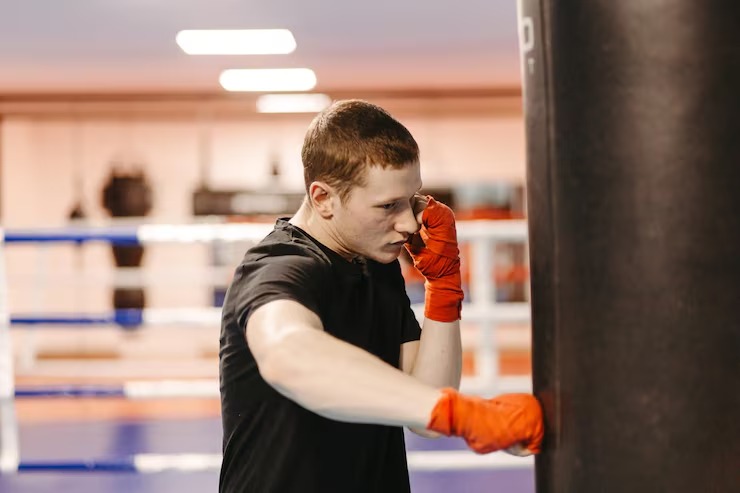
The gym smelled like sweat, rubber mats, and the particular metallic tang that comes from places where people regularly bleed. Twenty fighters were scattered throughout the space—some hitting heavy bags, some grappling on the mats, some doing conditioning work with weights and resistance bands. Music pounded from speakers mounted in the corners, some aggressive rap that was all bass and anger.
Dustin Freeman was in the cage at the center of the gym, working combinations with his coach Perry Cox, a loud-mouthed trainer whose reputation was built more on intimidation than actual technique. When Shane walked up to the cage, several fighters noticed and nudged each other, recognizing that something interesting was about to happen.
“Dustin Freeman,” Shane called out, his voice cutting through the music and general noise of the gym.
Dustin stopped mid-combination and turned, confusion crossing his face when he saw the middle-aged man in carpenter’s pants and a sawdust-covered work shirt. “Do I know you?”
“No,” Shane said calmly. “But I know you. I know you put my daughter in the hospital. I know you’re a coward who hits women. And I’m here to teach you what happens when you pick on someone who can’t fight back.”
The gym went quiet. Even the music seemed to fade into the background as everyone stopped what they were doing to watch. Dustin’s confusion transformed into recognition, then anger. “You’re Marcy’s old man,” he said, a cocky grin spreading across his face. “She’s been talking about you. Said you used to be some big-shot Marine instructor or whatever. That supposed to scare me?”
“It should,” Shane replied, his voice still conversational, still calm, which somehow made the words more threatening than if he’d been shouting.
Perry Cox stepped forward, all bluster and false confidence. “Old man, you need to leave before this gets ugly. You don’t walk into our gym and threaten our fighters.”
“I’m not threatening,” Shane said, his eyes never leaving Dustin. “I’m promising. Your boy put his hands on my daughter. Now I’m going to put my hands on him. Anyone who has a problem with that is welcome to try stopping me.”
What happened next would be analyzed and discussed in both military and criminal circles for years to come. Perry Cox made the mistake of grabbing Shane’s shoulder, attempting to physically escort him from the gym. Three other fighters moved in to support their coach, surrounding Shane in what they assumed was an overwhelming show of force.
They had never encountered someone with Shane’s level of training and experience. They had no idea they were facing a man who had spent fifteen years teaching the most elite warriors in the world how to kill people with their bare hands.
The violence lasted exactly seventeen seconds.
Perry Cox’s grab became a wrist lock that drove him to his knees, followed by a knee strike to the temple that put him unconscious before he hit the ground. The fighter coming from Shane’s left caught an elbow to the solar plexus that stopped his breathing and dropped him gasping to the floor. The one from the right received a palm strike to the ear that ruptured his eardrum and destroyed his balance, sending him reeling into the cage wall.
The fourth fighter actually hesitated, suddenly realizing he was watching something far beyond anything he’d encountered in the gym. That hesitation saved him from serious injury—Shane simply swept his legs and put him on the ground with a knee to the chest that knocked the wind out of him but didn’t cause lasting damage.
Dustin Freeman, to his credit, actually tried to fight. He came off the cage ropes with a flying knee that would have been devastating if it had landed against anyone with less training than Shane. Instead, Shane sidestepped with minimal movement, caught the extended leg, and used Dustin’s own momentum to drive him face-first into the cage wall hard enough to bounce his head off the chain-link.
Before Dustin could recover, Shane had him in a rear-naked choke, applying just enough pressure to cut off blood flow to the brain without crushing the windpipe. “You ever touch my daughter again,” Shane whispered into Dustin’s ear as the fighter’s struggles grew weaker, “and I won’t be this gentle. You understand me?”
Dustin’s response was a weak gurgle as consciousness faded. Shane held the choke for another three seconds, then released him, letting Dustin’s unconscious body slump to the mat.
The entire gym stood in stunned silence. Four fighters and their coach were on the ground—two unconscious, one holding his ruptured ear and sobbing, one with a destroyed knee, one just now starting to breathe again. And Shane Jones, the middle-aged furniture maker with the gray beard and extra weight, stood in the center of the carnage with his breathing barely elevated and his hands completely steady.
“Anyone else?” Shane asked, his voice still calm, still conversational.
No one moved. No one spoke. The legend of what happened at Titan’s Forge that day would grow with each retelling, but the basic truth remained unchanged: one man had walked into a gym full of fighters and dismantled five of them in less time than it takes to brew a cup of coffee.
Shane walked out of the gym without looking back, got in his truck, and drove home to his